You Are More Than A Standard Prescription
Menopause Care Is Not One-Size-Fits-All
You waited two months for an appointment.
You finally sit down for a 15-minute visit and try to explain everything happening in your body—insomnia, brain fog, anxiety, night sweats, exhaustion, low libido, irritability, or the feeling that you just don’t feel like yourself anymore.
You leave with:
a .025 estradiol patch twice weekly
Prometrium 100 mg nightly
And maybe your symptoms improve.
Maybe they don’t.
But the real issue isn’t whether those medications “work.”
The issue is that menopause and perimenopause care is often delivered as if there is a standard formula that fits everyone.
And there isn’t.

Hormone Therapy Is More Nuanced Than a Single Prescription
One of the most common frustrations women report is not necessarily the treatment itself—but the lack of conversation around it.
Why this option?
What are the alternatives?
What else could we consider if this doesn’t feel right?
Hormone therapy is not meant to be a quick prescription and a long follow-up interval. It should be a dynamic, individualized process that takes into account:
symptoms
medical history
family history
risk factors
sleep patterns
mood and mental health
lifestyle and stress load
personal goals
medication sensitivity
and how your body actually responds over time
Two women the same age can have completely different needs. That’s not inconsistency in care, that’s physiology.

Estrogen: There Is More Than One Option
When many people think of estrogen therapy, they think of “the patch.” But estrogen is not one medication in one form. It is a category of therapies with multiple delivery methods, dosing strategies, and clinical considerations.
Common Estrogen Options Include:
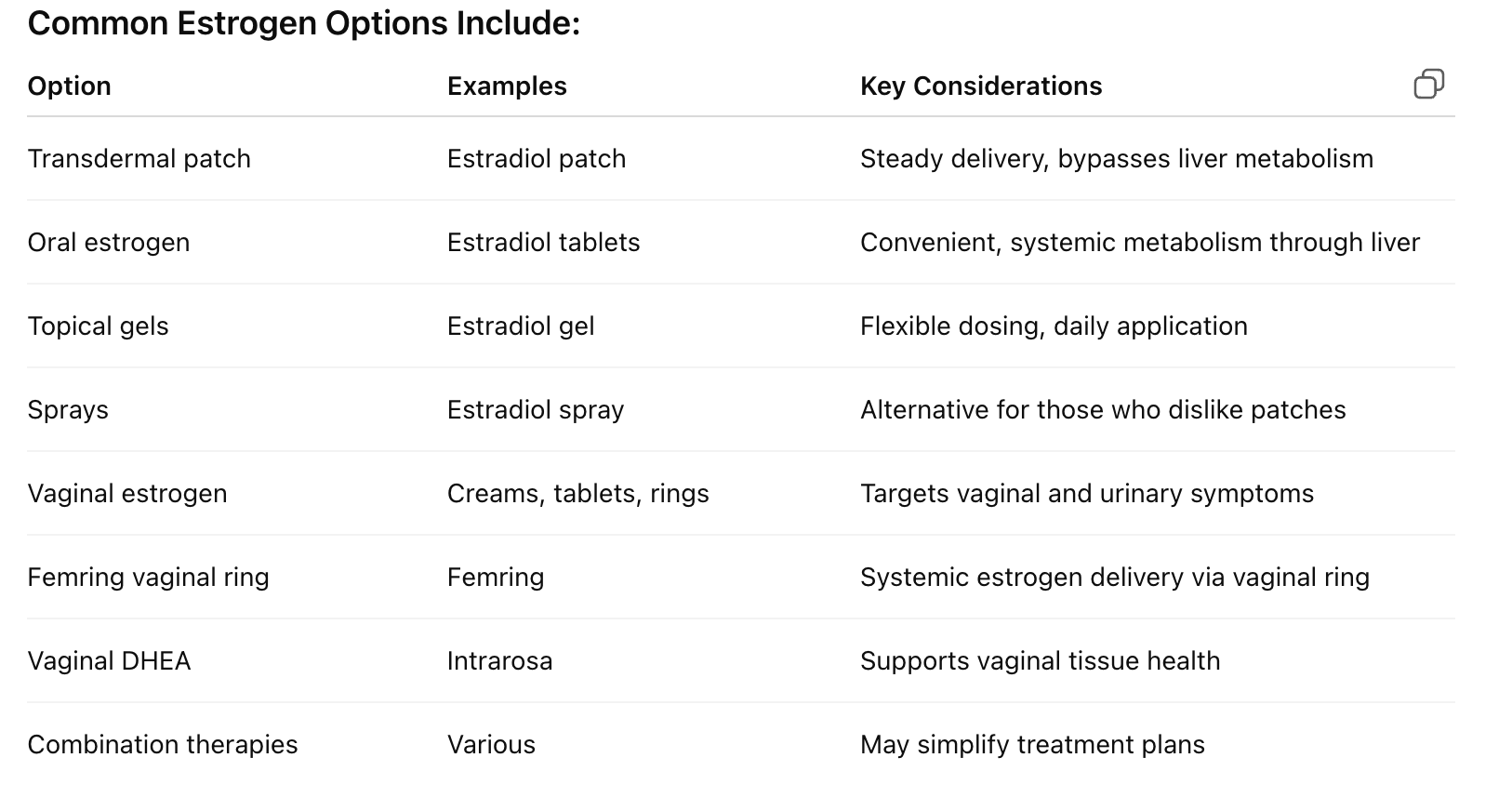
One important distinction that is often missed is that not all vaginal estrogen therapies function the same way.
Some are local therapies, primarily treating vaginal dryness, urinary symptoms, or discomfort. Others, such as Femring, provide systemic estrogen therapy, meaning they can also help symptoms like hot flashes and night sweats.
Understanding that difference can completely change how treatment is chosen.
Why Delivery Method Matters
There is no universally “best” estrogen option.
For example:
Some people develop skin irritation with patches
Some prefer the simplicity of pills
Some need targeted vaginal support for urinary or sexual symptoms
Some have medical histories that influence safer delivery routes
Some respond better to one formulation than another
This is where individualized care becomes essential—not optional.
Progesterone Is About More Than Uterine Protection
Progesterone is often introduced with a single explanation: it protects the uterine lining when estrogen is used.
That is true—but incomplete.
Progesterone can also significantly affect:
sleep quality
mood stability
anxiety levels
sedation or grogginess
bloating and physical side effects
overall tolerability of hormone therapy
Common Progesterone Options Include:
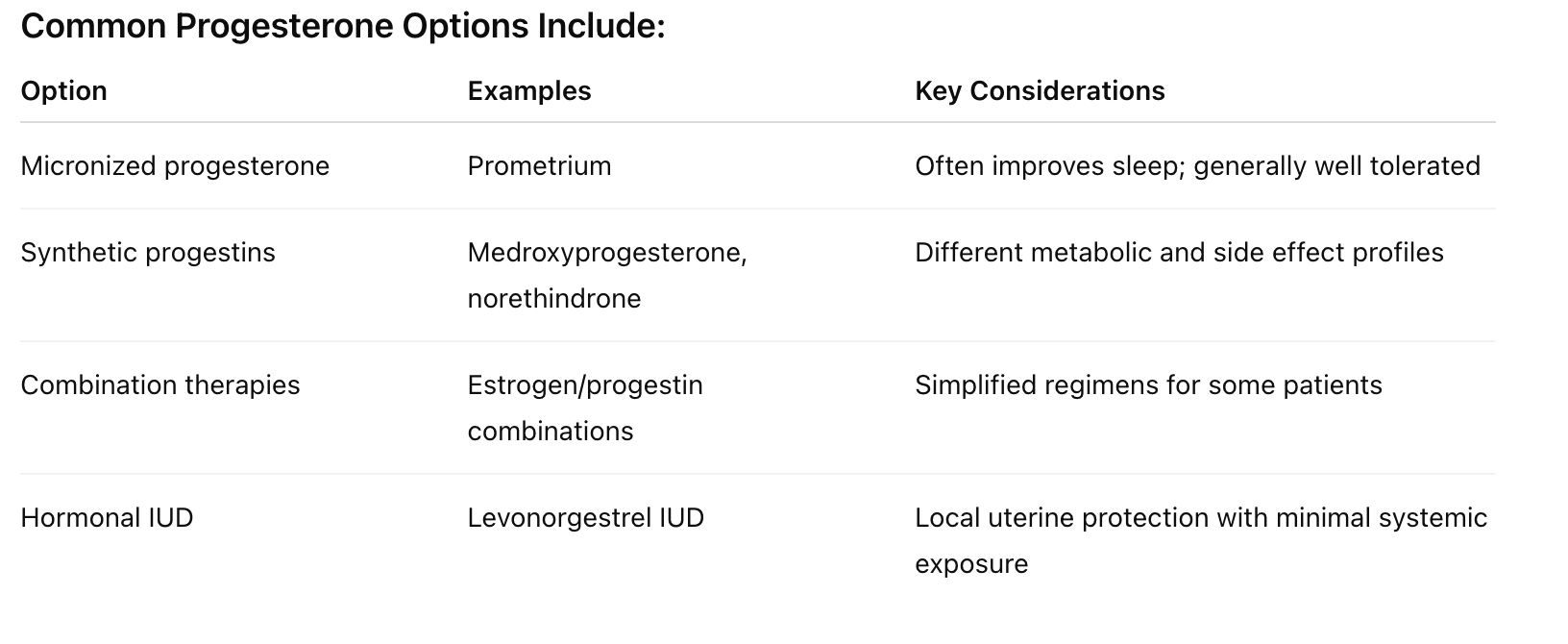
Some women feel dramatically better on micronized progesterone, especially in terms of sleep. Others feel sedated, emotionally flat, or simply “not themselves.”
This variability is not a problem to ignore—it is a signal to adjust and individualize.
Testosterone: An Important but Often Overlooked Conversation
Testosterone in women is frequently misunderstood or left out of discussions entirely.
While libido is often the reason it is considered, testosterone may also play a role in:
energy levels
motivation
cognitive clarity (“brain fog”)
muscle maintenance
exercise recovery
overall sense of vitality
Testosterone therapy is not appropriate or necessary for everyone. But the conversation about it should still exist.
Women deserve informed, balanced discussions about all hormone pathways—not just estrogen and progesterone.

Menopause Care Should Be a Partnership
Too often, menopause care becomes a transactional experience:
short visit
limited explanation
standardized prescription
long gap before follow-up
But real care looks different.
It includes:
education that actually makes sense
time to ask questions
shared decision-making
adjustments based on response
follow-up that reflects real life, not theory
and a provider who listens to the full picture
Hormone therapy is rarely “set it and forget it.”
It is an evolving process.
The Bottom Line
There is no single best menopause treatment plan.
There is only the best plan for you—your symptoms, your body, your history, and your goals.
That’s why menopause care requires time, nuance, and individualized thinking—not a standardized template.
Because women deserve more than a prescription.
They deserve care that actually fits their life.

Ascend Today
Ascend Hormone Care
Compassionate, individualized hormone therapy for women navigating perimenopause and menopause.