You Don’t Have to Have the Answers Before You Ask for Help

You Don’t Have to Have the Answers Before You Ask for Help
There’s a quiet pressure many women feel when something in their body starts to change: the idea that you should figure it out first, explain it clearly, and only then be “allowed” to seek care.
But that’s not how medicine is meant to work.
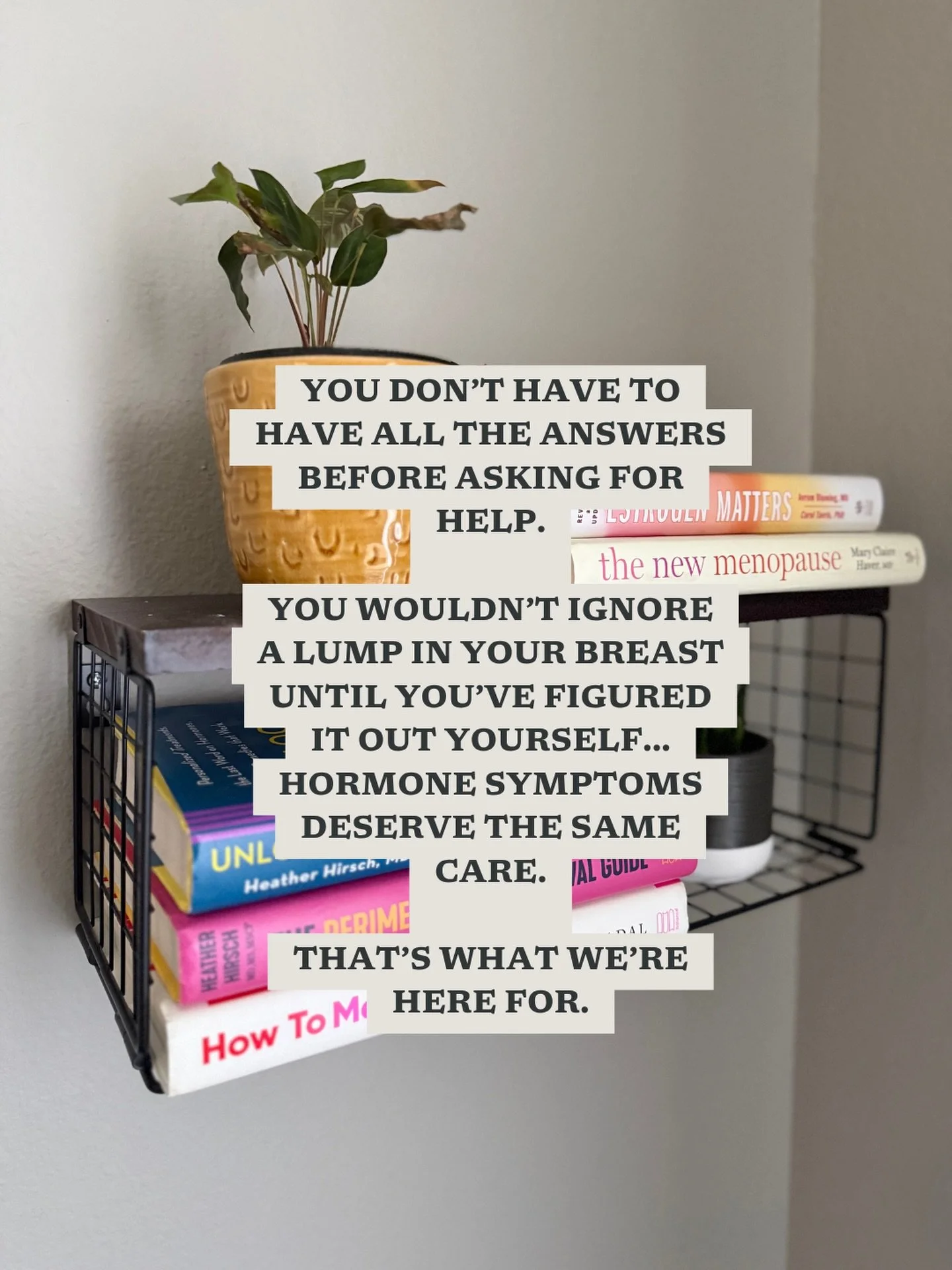
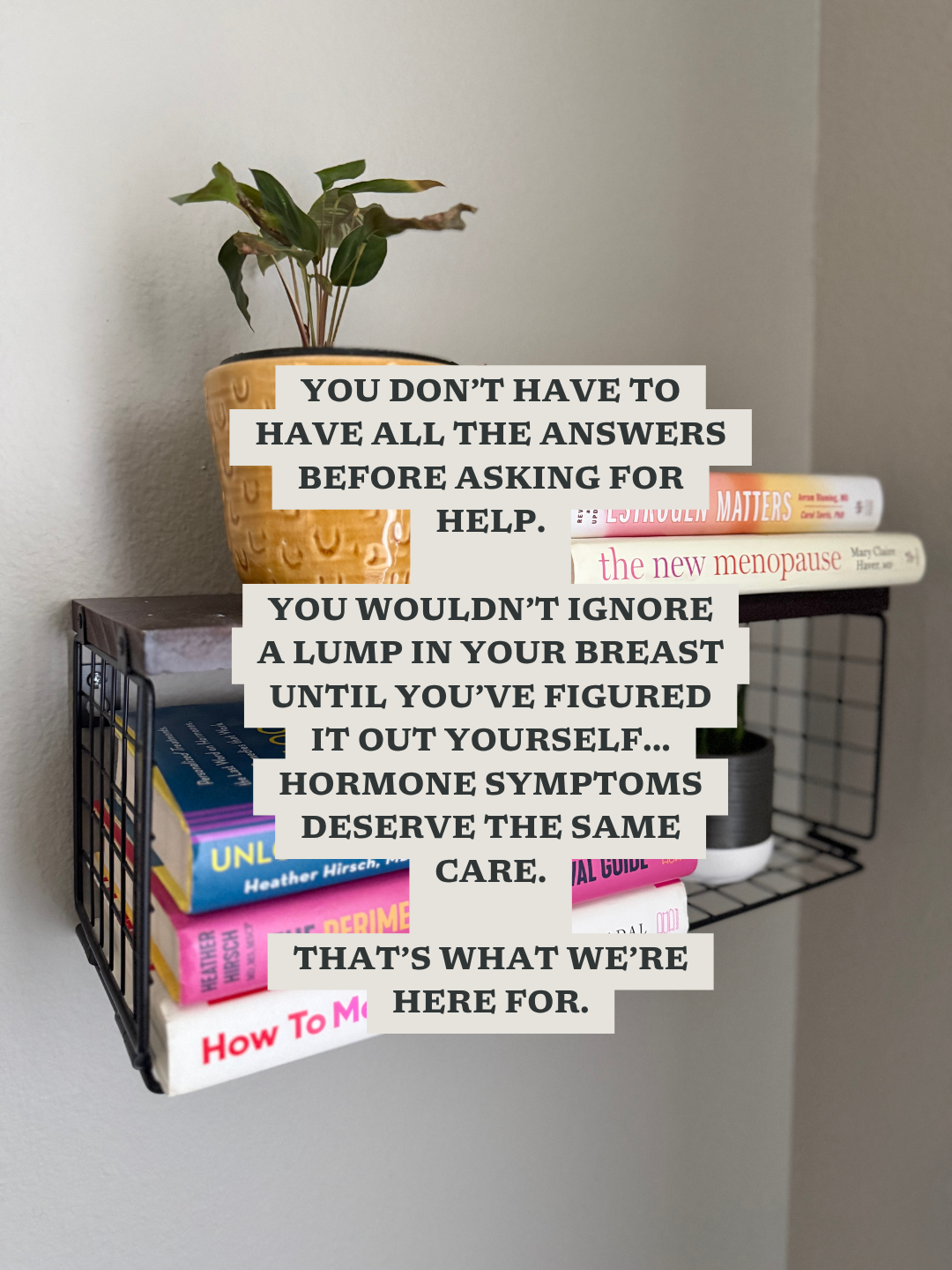
You wouldn’t ignore a lump in your breast until you had already researched, diagnosed, and understood exactly what it is. You’d seek evaluation. You’d expect guidance. You’d expect support in making sense of it.
Hormone-related symptoms deserve the same approach.

Symptoms are information, not a test you have to pass
Hot flashes, sleep disruption, mood changes, cycle irregularities, brain fog, anxiety that feels new or unfamiliar—these are not puzzles you’re supposed to solve alone before you’re taken seriously.
Symptoms are information, not a test you have to pass
They’re signals. And signals are meant to be evaluated in context, not dismissed until they become severe enough to disrupt everything.
Yet many women are taught (directly or indirectly) to minimize what they’re experiencing. To wait. To push through. To assume it’s not “bad enough” yet.
That delay often becomes the norm, even when symptoms are clearly affecting quality of life.
You don’t need a diagnosis before you walk in the door
One of the most common misconceptions in women’s health is the idea that you need to arrive at an appointment already knowing what’s wrong.
In reality, that’s the clinician’s role.
Your job is to notice changes in your body and communicate them. Our job is to listen, evaluate patterns, rule things in or out, and help you understand what’s actually going on.
Care begins with curiosity, not certainty.
Waiting for a “breaking point” is not the standard
There is no requirement that symptoms must become severe before they are valid.
You don’t need to reach exhaustion, emotional overwhelm, or physical depletion to justify an evaluation. The goal of care is not to wait until things are unmanageable…it’s to intervene earlier, when support can actually make a meaningful difference.
Earlier attention often means simpler treatment, better outcomes, and less disruption to your life.
At Ascend Hormone Care, we see care as a partnership.
Whatever it is, the way you tell your story online can make all the difference.
This is what real care looks like
You don’t need to translate your symptoms into medical language before you’re taken seriously. You don’t need to justify why it matters. If something feels off, that alone is enough reason to be seen, heard, and evaluated.
Because that’s where good care actually starts.